Condition

Headaches when your head hurts but the source is in your neck.

A huge percentage of recurring headaches are cervicogenic. They start in the upper neck. Tight muscles and misaligned vertebrae compress nerves that radiate into the head. Fix that, and the headaches stop coming back.

Medically reviewed by Dr. Tom McGuire, DC  ยท  Updated June 2026

Secure Your New
Patient Appointment
Returning Patient? Text or call us at 732-583-7799
Cervical-focused care Spinal chart and cervical alignment
How we help

Find the source. Stop the cycle.

Most chronic headaches aren't a head problem. They're a neck and upper back problem that nobody's checked yet.

Our approach

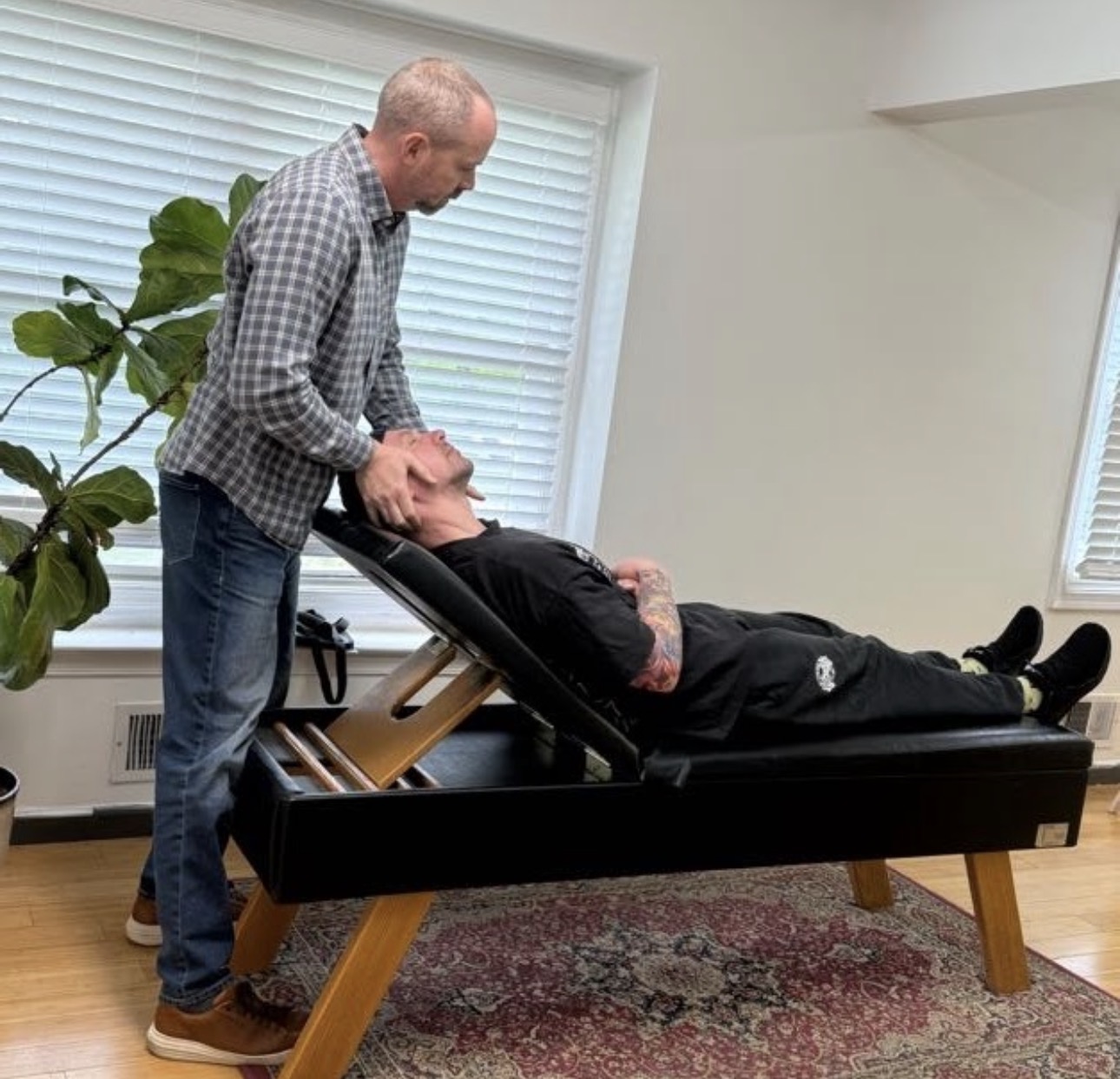
  • Detailed cervical spine evaluation to find the trigger zone.
  • Gentle upper cervical adjustments to relieve nerve compression.
  • Trigger point and muscle release in the upper back and base of the skull.
  • Posture and movement plan to keep the alignment.
  • Functional health review for food triggers, dehydration, and inflammation patterns.
The result: fewer headaches. Less severe when they do hit. Less reliance on pain medication to get through your day.
The honest version

Most migraines aren't a brain problem.

They're a neck problem that hasn't been checked. The C1-C2 vertebrae sit right where the brainstem exits the skull. When they're out of alignment, the nervous system pays the price.

Secure Your New Patient Appointment Returning Patient? Text or call us at 732-583-7799

When your headache is really coming from your neck

Not every headache starts in your head. Many start in the neck and are called cervicogenic headaches. Clues that yours might be one: pain that begins at the base of your skull and wraps forward, pain behind the eyes or in the temples, a stiff or tender neck that goes along with it, headaches that are worse at the end of a long desk day, or headaches on one side that come back again and again.

What is really triggering it

The joints and muscles in your upper neck share nerve pathways with the nerves that feed your head. When those joints are stuck and the muscles are tight, that tension refers up into your head as pain. Posture is a big driver: hours looking down at a screen pull your head forward, compress the joints, and irritate the nerves. Pills can quiet the pain for a few hours, but the stuck joint is still there, so the headache returns.

How we address it

At our Matawan and Bradley Beach offices, we do a careful exam of your neck to find the trigger zone, then use gentle, specific adjustments to free the joints and release the muscle tension. We also look at your posture and the everyday habits feeding it, and we check simple functional health triggers like dehydration and inflammation. Many patients get fewer and milder headaches and lean on pain medication less.

Common questions

Headaches FAQ

Will this stop my migraines?
For many patients, yes, especially when migraines are tied to neck tension and posture. We can't promise miracles, but we can promise an honest exam and a clear plan. If we're not the right fit, we'll tell you.
Is this safe for someone with chronic headaches?
Yes. We use gentle, specific techniques especially when chronic headaches are involved. No aggressive manipulation, no surprise movements.
What if it's actually a brain issue?
If anything in the exam suggests it's neurological or something we shouldn't treat, we'll refer you out. We work with neurologists when needed and never substitute for medical care.